Ur-Fascism
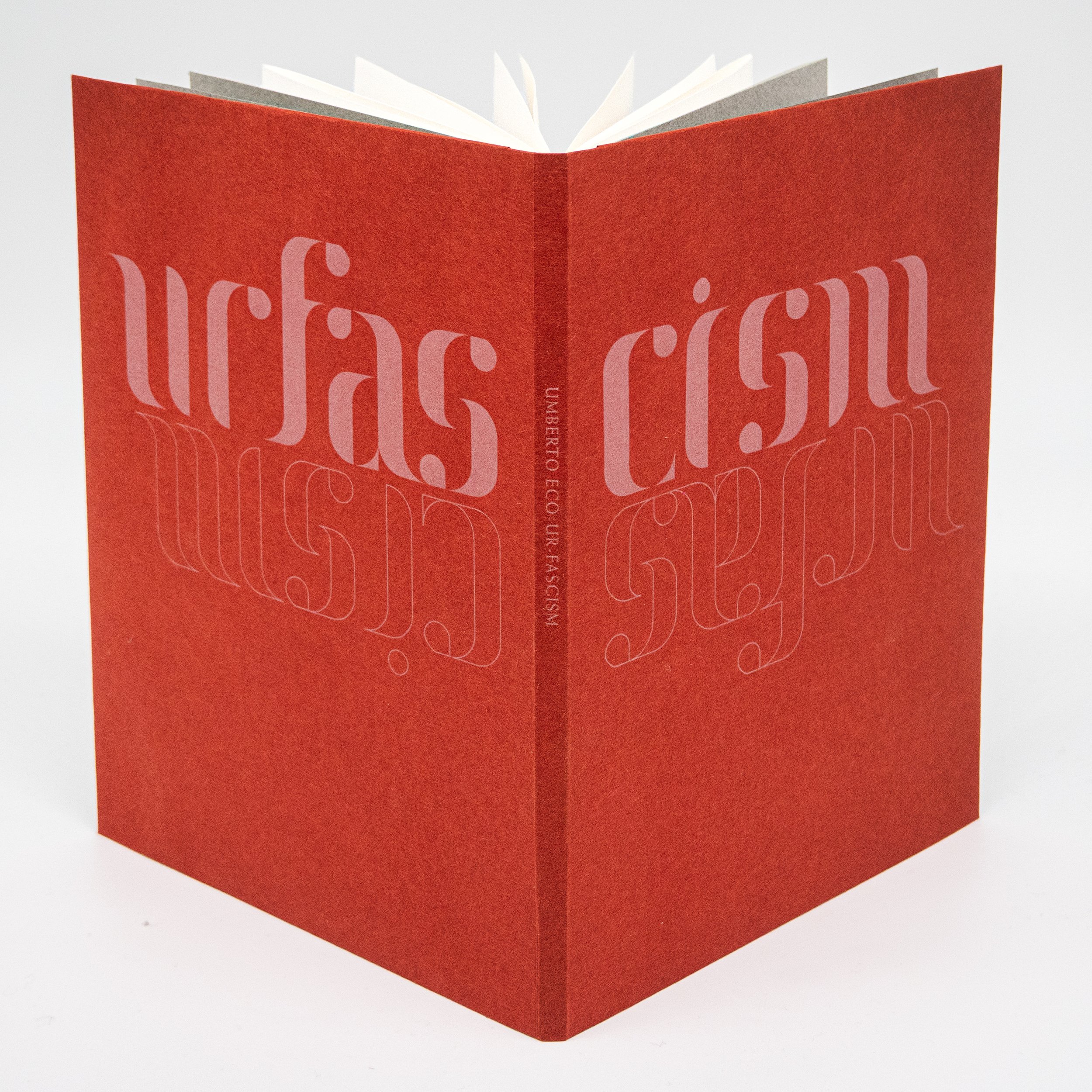
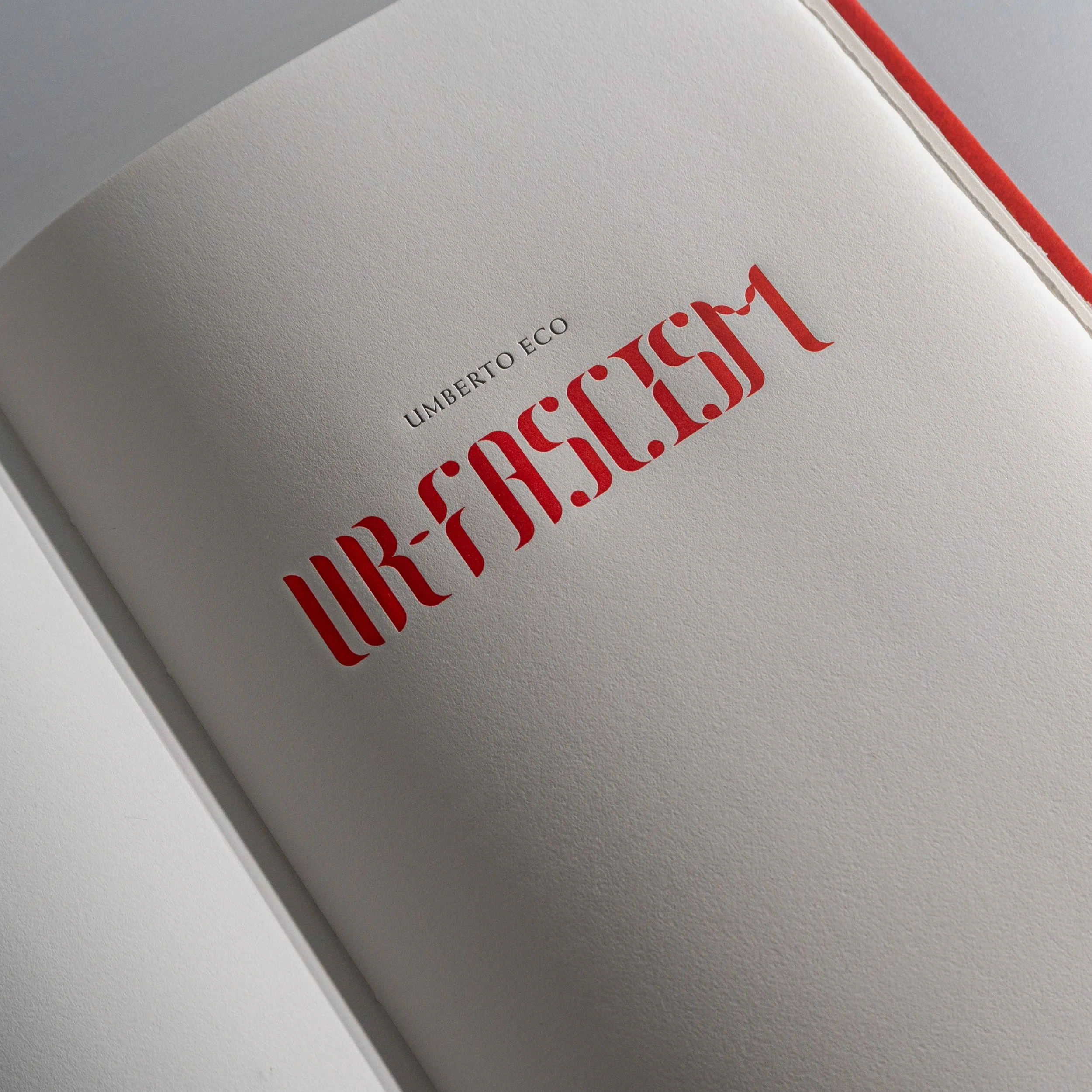
Ur-Fascism
THE FOURTEEN FEATURES OF FASCISM BY UMBERTO ECO
Thirty years ago, when fascism seemed like a corpse buried for good, Umberto Eco published an essay identifying fourteen “features” around which eternal or ur-fascism might develop.
I only learned of this essay last year, when a wrong turn down a street in Trieste (Valeria’s hometown) put me face-to-face with it. I was on my way to Umberto Saba’s bookshop when, taking a sinistra instead of a destra, I landed in the middle of a political rally. At first, I didn’t even recognize it as a political rally. A rally in Portland means colorful hair, colorful signs, colorful people of all ages. At this rally, the dress code was black – all black – and the people were white – only white – standing in rows – all men – mostly young men, about my age. By looks alone, I fit right in, and nobody bat an eye at my sudden appearance. The crowd was listening attentively to a speaker on a bullhorn. I nudged a guy in the back and whispered, “Scusi, che questo?” What this? “Siamo fascisti,” he whispered, we’re fascists, and, gesturing to the speaker, “Prego!” Listen!
Their rally felt like an alien planet, its people like aliens. So different than me, in outlook and belief, as to be unknowable. But nothing is unknowable. The shopkeeper at Umberto Saba’s knew this. At the counter, around the block from the fascist rally, he was giving away a pamphlet – Umberto Eco’s Ur-Fascism, an essay illuminating the social knots around which fascism is spun.
Fascism is beyond the pale, so why learn about it? Because, I think, we should never stop trying to understand one another, even when the gulfs between us seem insurmountable. I’m lucky to count a wide variety of political persuasions among my friends and family. I’m reminded constantly that everybody is doing their best to make sense of things. The best hug I’ve had was from Linda, who I met on an election day. My hair was blue; her hat was red. We got to know each other while waiting in line, laughed plenty, and hugged just before heading into the voting booth to (in her words) cancel each others’ votes out. The paramount virtue is tolerance – the grace to accept those with whom you disagree. Linda certainly extended this grace to me. In reading Ur-Fascism I try to see the sources of hope and fear that drive those fascist ragazzi in Trieste and, in doing so, I try to find some acceptance, not for their ideas, but perhaps for the people who hold them. To err is human. And if, as Eco thinks, fascism is eternal, so too must be its answer: “Love your enemies, bless them that curse you, and do good to them that hate you.”
Please note: This edition includes Eco’s fourteen features, but not the short memoir which precedes them. While Eco’s analysis is born from personal experience, the analysis is ultimately what will prove most useful and timeless.
COLOPHON
•⠀The thirtieth edition of No Reply, 2 0 2 5. (Nb. The edition was finished in 2025, the essay’s thirtieth anniversary. Some copies circulated then, but the public announcement waited until early 2026.)
•⠀Limited to 1 27 copies.
•⠀Measuring 7 ½ by 10 ½ inches and 24 pages.
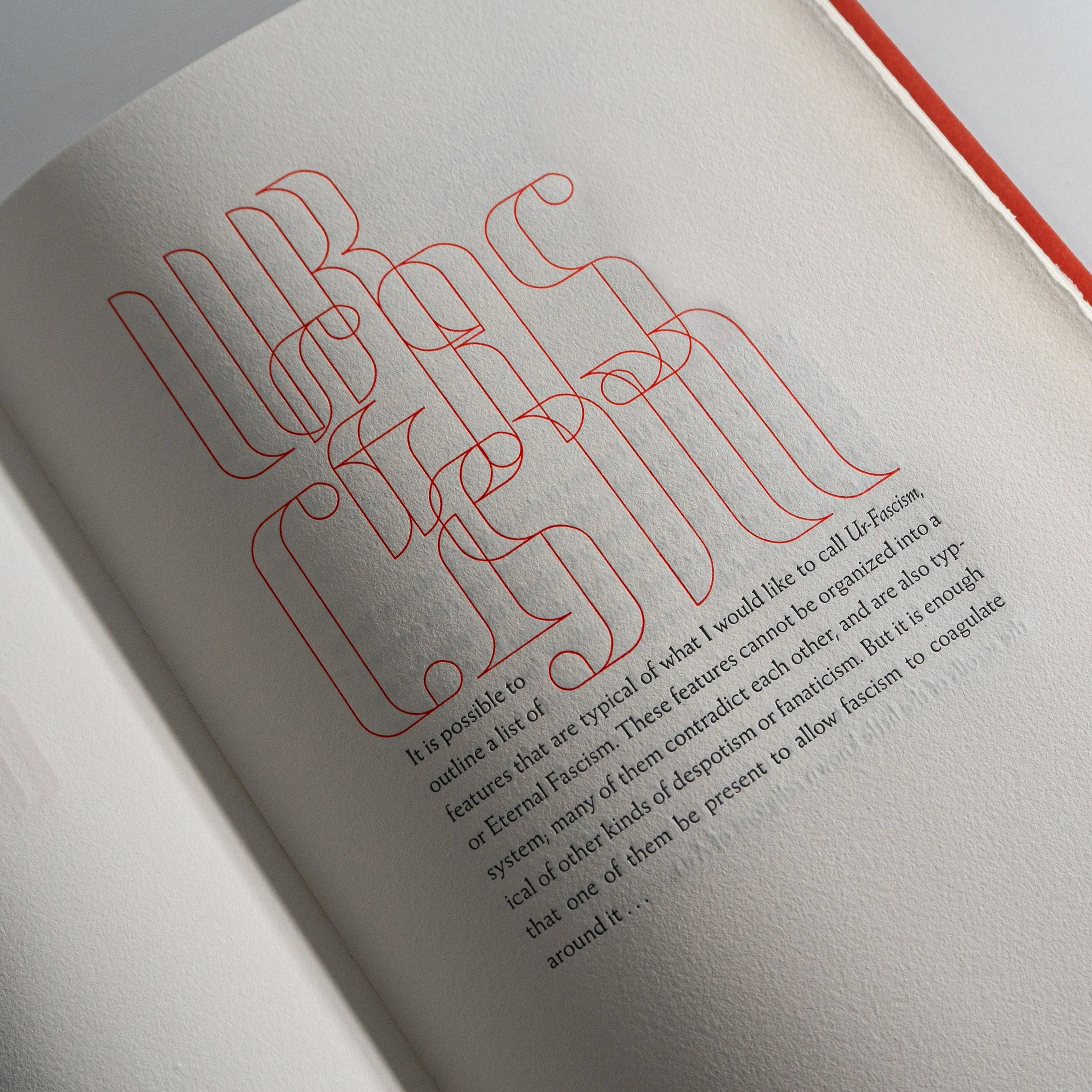
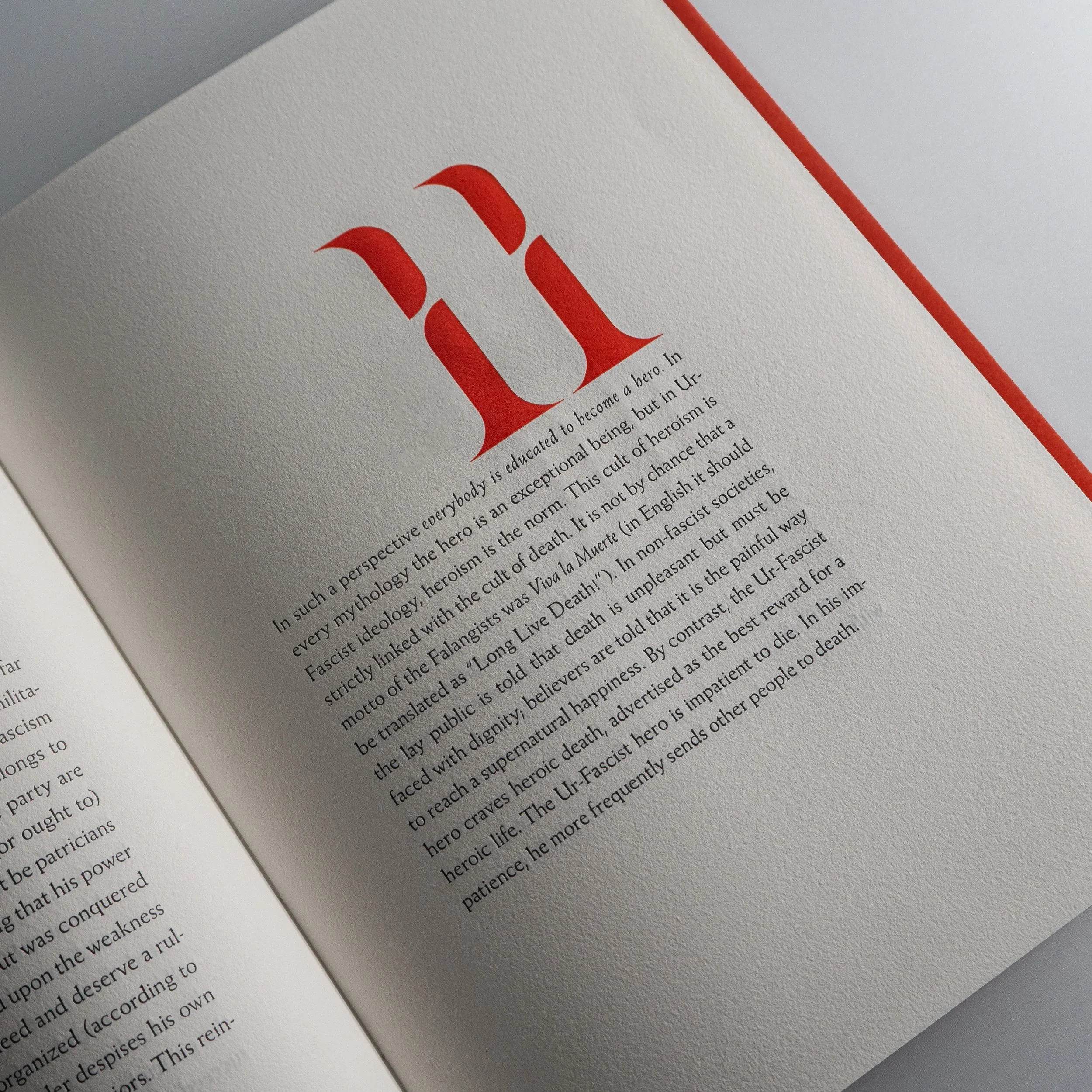
•⠀Typeset in Weiss and Johanna.
•⠀Printed letterpress on a hand-operated Vandercook Universal I proofing press.
•⠀Zerkall-bütten, with Fabriano Tiziano endpapers.
•⠀Bound in a limp vellum style using Awagami Shin Inbe papers.